Home › Advice › Appliances › Washer Leaking? What to Do in the First 10 Minutes
Washer Leaking? What to Do in the First 10 Minutes
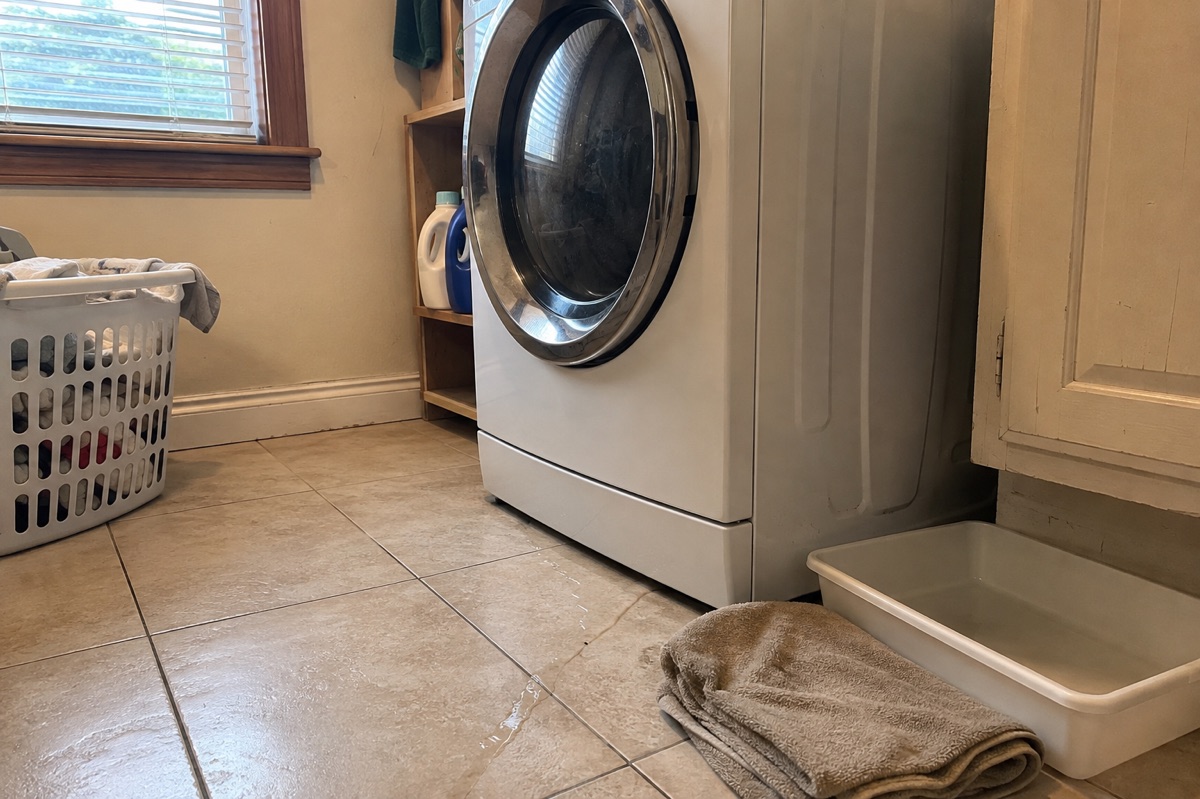
You walk into the laundry room and find water where it should not be. The first job is not to name the broken part. It is to stop more water without stepping into an electrical risk.
Minute 1: stop and look from the doorway
Keep children and pets out. Do not step into water to reach a plug, outlet, power strip, or control. If water touches electrical parts, the panel, or a damaged cord, stay back and call for qualified help.
For smoke, sparks, heat, or a burning smell, leave the area and call emergency services if there is immediate danger.
If you can reach the washer controls from a dry spot, stop the cycle. Do not reach over moving parts or put a hand into a drum that is still turning.
Minutes 2–3: stop the water if it is safe
Many washers have hot and cold supply valves on the wall. Turn them off only if you can identify them, reach them from dry flooring, and move them without force.
Do not twist a rusty valve, climb behind the machine, or pull a heavy washer by yourself. If the valves are unsafe or the leak is fast, use your known main water shutoff or call a plumber.
The Insurance Information Institute advises checking washing-machine hoses for cracks and leaks. A hose can release a lot of water, so stopping the supply matters more than finding the exact split right away.
Minutes 4–6: slow the spread
Work from the dry side. Use towels, a mop, or a wet vacuum rated for the job. Move dry items out of the water path. Do not use a normal household vacuum on water.
If the ceiling below is wet, keep people out from under any sag or bulge. Do not puncture it. Water near a ceiling light or other wiring needs an electrician or emergency professional as well as leak repair.
EPA says mold growth depends on moisture. Fast drying after the leak is fixed helps lower the risk, but a wet wall, floor layer, cabinet, or ceiling may need more than surface wiping.
Minutes 7–10: trace the highest wet point
Use your eyes and a flashlight. Do not open the washer. Look for the highest place you can see water:
- below the front door or lid;
- near the soap dispenser;
- at the floor drain or standpipe;
- along the wall behind the machine;
- under a nearby sink;
- at an easy-to-see supply hose or valve;
- under the front or side of the washer.
Water runs along hoses, cabinets, and floor seams. A puddle at the front does not prove the front seal failed.
Note when the leak began. Did it happen while filling, washing, draining, or spinning? Did the water look clear or soapy? Did a sink or drain back up at the same time? Those details are more useful than a guessed part name.
Do not run a test load yet
One dry-looking floor is not proof that the leak is gone. A loose hose may leak only during filling. A drain problem may show up only when the pump runs. A door seal may leak only with a certain load.
Do not run another cycle until the source is known and the washer, cord, outlet, and floor are safe. Do not tape a hose, tighten a fitting under pressure, bypass a switch, or tip the washer.
Take five useful photos
Photograph:
- the whole laundry area;
- the puddle edge and water path;
- the highest wet point you can see;
- the wall valves and drain from a safe angle;
- the model label if it is easy to reach.
Mark the puddle edge with painter's tape on dry flooring and add the time. If it grows while the washer is off and its valves are closed, tell the plumber or technician.
Who should you call?
Call an appliance technician when the water appears to come from the washer itself. Call a plumber when it comes from a wall valve, supply pipe, drain, or backed-up standpipe. You may need both when the source is not clear.
Report the cycle stage, water type, photos, valve position, model number, and any noise or code. After repair, use the water-meter leak check to look for other flow only when every planned water use is off. If an odor remains after drying, use the musty-smell inspection guide.
Quick answers
- What should I do first when a washer leaks?
- Stop the cycle if you can do so from a dry spot. Keep away from wet plugs, cords, outlets, and panels. Shut off the washer's water valves only if they are easy to identify and reach safely, then contain water from the dry side.
- Can I pull the washer out to find the leak?
- A washer is heavy and may shift, tip, crush a hose, or pull a cord. Do not move it alone or while water or electrical hazards are present. A technician can inspect the rear connections safely.
- Does water at the front mean the washer door is leaking?
- Not always. Water can travel under the machine from a hose, drain, valve, pump, dispenser, nearby sink, or wall connection. Trace the highest wet point you can see without moving or opening the washer.
Keep your home plan moving
Get the free Seasonal Home Maintenance Schedule
Month-by-month checklist for your state — roof, gutters, HVAC and more. Plus license-lapse alerts for contractors you're considering.
We don't sell your email address. See our privacy policy.
Sources
- How to Protect Your Home From Water Damage — Insurance Information Institute
- Appliance and Electrical Fire Safety — U.S. Fire Administration
- How Can I Tell If I Have a Mold Problem? — U.S. Environmental Protection Agency