Home › Advice › Moisture Drainage › Musty Smell but No Visible Mold? Trace the Moisture
Musty Smell but No Visible Mold? Trace the Moisture
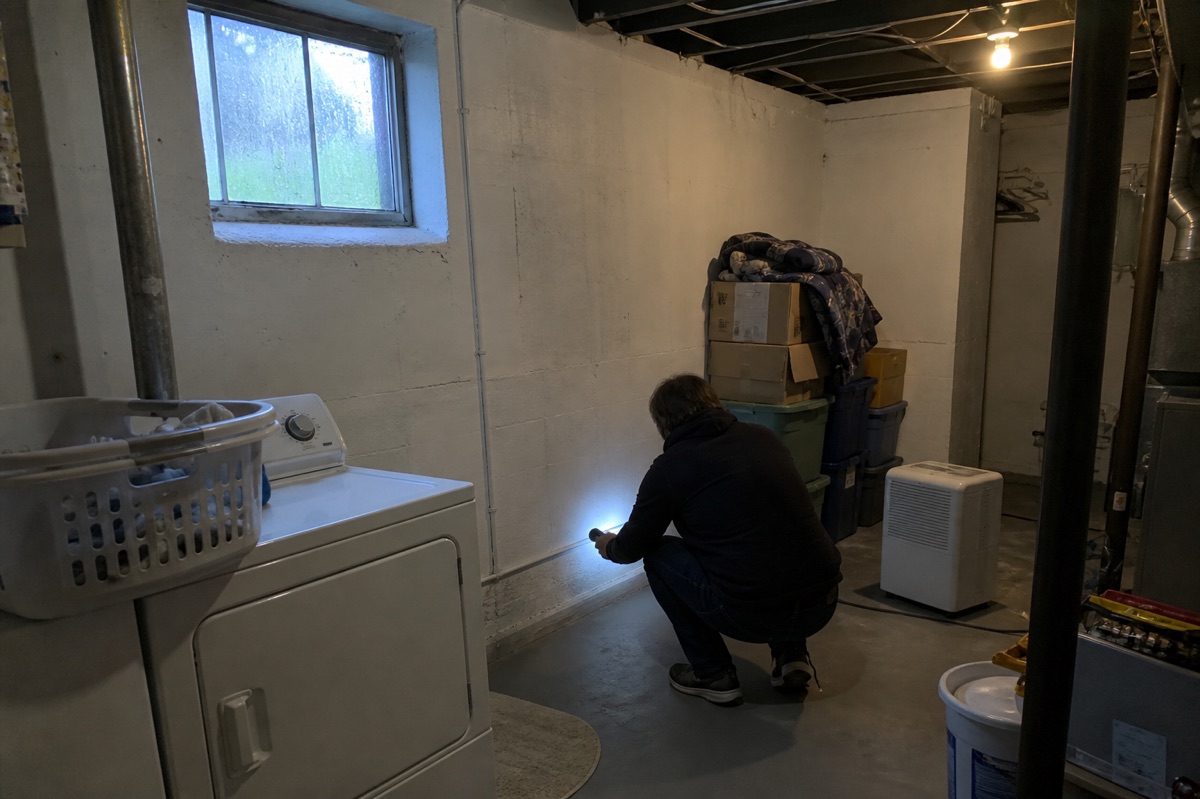
The room smells damp, but the walls look clean. Do not cover the odor and call the job done. EPA says a moldy odor suggests mold may be growing and the area should be checked. The smell still does not tell you where it is or how large it may be.
First, make a smell map
Walk the home when windows have been closed for a while. Write down where the odor is strongest and when it changes.
Ask:
- Is it stronger after rain?
- Does it change after a shower, laundry load, or dishwasher cycle?
- Is it worse when the heating or cooling fan runs?
- Is it close to a drain, outside wall, window, ceiling stain, or stored box?
- Does one cabinet or closet hold the smell?
Do not lean into a dark crawl space or air duct to sniff. Your notes should narrow the search without putting you in a tight or unsafe area.
Check the easy water sources
Use a flashlight and look, without opening equipment, at:
- pipes and the cabinet base under sinks;
- the wall and floor around toilets, tubs, and showers;
- washer hoses and the laundry floor;
- the water heater and its drain pan;
- the refrigerator water line area;
- window sills and outside-door corners;
- ceilings below bathrooms or the roof;
- the HVAC drain pan or line only where it is meant to be viewed.
Look for a water ring, peeling paint, swollen wood, rust, soft trim, condensation, or a surface that stays darker than the area around it.
If the water meter moves when all planned water use is off, use the hidden-leak meter guide and call a plumber as needed.
Check humidity and cold surfaces
Moist air can turn to water on a cold window, pipe, wall, or duct. A simple humidity gauge can show whether a room stays damp. EPA generally advises keeping indoor humidity below 60%, and often between 30% and 50% when practical.
One reading is not the whole story. Record the room, date, weather, and reading in the morning and evening for several days.
Do not aim a heater at a damp wall. Do not seal wet material behind paint, caulk, or new flooring. The water source must be fixed and the material must dry.
Check stored items one group at a time
Cardboard, rugs, clothes, and paper can hold damp odors. From a dry, open area, move one group at a time and look under it. Wear gloves if items are damp or stained.
Do not shake dusty or moldy material. Bag it or leave it in place until you know the safe cleanup plan.
Do not use scent as a repair
Air freshener, a candle, or a stronger cleaner may hide the smell for a few hours. It does not fix a leak or damp material.
EPA says portable air cleaners and HVAC filters do not solve mold and musty-odor problems because they do not remove the moisture source. EPA also warns against air cleaners that make ozone. Ozone can irritate the lungs.
Stop before opening a wall or duct
Hidden growth may sit behind drywall, wallpaper, carpet, ceiling tile, or inside a wet building space. Opening that space can spread dust and expose wiring, pipes, insulation, or older building materials.
Use a qualified moisture, mold, HVAC, roofing, or plumbing professional when:
- the smell is strong but the source stays hidden;
- the wall, floor, or ceiling is soft or swollen;
- a wet area is large or has stayed wet;
- sewage or dirty flood water was involved;
- the odor seems tied to the HVAC system;
- anyone in the home has a health concern;
- safe access would require a ladder, crawl-space entry, or wall opening.
Do not run an HVAC system if you know or suspect it is contaminated with mold. EPA says it may spread mold through the building.
Give the pro a short record
Share the smell map, humidity readings, rain and appliance timing, old leak records, and photos of stains or damp spots. Ask how the moisture source will be found before cleanup or paint begins.
If you find visible growth, use the small mold or professional help guide. If the clue is overhead, use the ceiling water stain guide and stay out from under any sagging area.
Quick answers
- Does a musty smell always mean mold?
- No, but EPA says a moldy odor suggests mold may be growing and should be checked. Damp materials, drains, stored items, pests, and other sources may also create odors.
- Will an air cleaner remove a musty smell?
- EPA says air cleaners and HVAC filters do not fix the moisture source that causes mold and musty odors. Find and correct the water or humidity problem.
- Should I cut open a wall to look for mold?
- Not as a first step. Hidden mold checks can disturb material, wiring, pipes, insulation, lead paint, or asbestos. A moisture or building professional can choose a safer way to inspect.
Keep your home plan moving
Get the free Seasonal Home Maintenance Schedule
Month-by-month checklist for your state — roof, gutters, HVAC and more. Plus license-lapse alerts for contractors you're considering.
We don't sell your email address. See our privacy policy.
Sources
- What Does Mold Smell Like? — U.S. Environmental Protection Agency
- Mold Course Chapter 3: Finding Mold and Moisture — U.S. Environmental Protection Agency
- Guide to Air Cleaners in the Home — U.S. Environmental Protection Agency