Home › Advice › Moisture Drainage › Gutters and Downspouts: Check Where the Water Lands
Gutters and Downspouts: Check Where the Water Lands
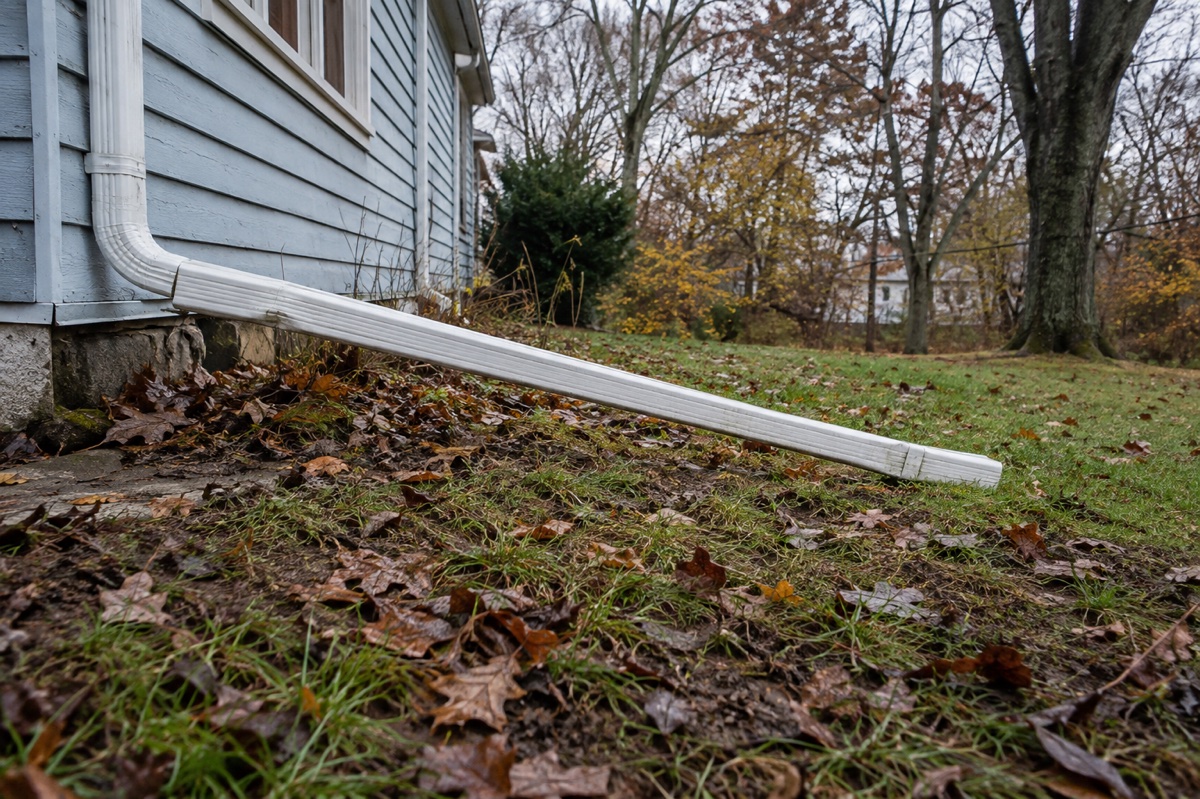
Roof runoff can add water near your foundation. Before discussing a repair, check where each downspout ends and where water goes next. Stay on stable ground in mild weather, or wait until rain has stopped. Take photos of overflow, loose joints, and pooling. Those clues can help a contractor assess the route; they do not prove why a basement is wet.
Pick a safe time to look
Skip the walk during thunderstorms, strong wind, flooding, or unsafe footing. Do not enter standing or flowing water to reach an outlet. There is no photo worth that risk.
If you hear thunder, go straight into a substantial building. The National Weather Service says to stay sheltered for at least 30 minutes after the last thunder. A porch is not safe lightning shelter. Stay away from windows, doors, plumbing, and electrical equipment while the storm is nearby.
After the weather clears, wet patches and moved leaves may still show you where to look. If a side yard is too narrow or slick, mark it as not checked.
Make one record for each downspout
Start with a wide photo. Show the wall, downspout, and outlet in one shot. Add a close view only if you can reach it from safe ground. Label the spot in your phone: front left, back door, or garage corner.
Answer four questions for each outlet:
- Does the pipe end close to the wall?
- Is its extension connected, or has a joint come apart?
- Does a splash block lean toward the house?
- Where does the water go after it leaves the pipe?
If the outlet feeds a buried line, take a photo of the joint from outside. If water backs up there, record it. Ask a drainage pro to check the route. This clue alone does not prove that the hidden pipe is clogged or broken.
Look up without climbing
Look up from the ground. Note a gutter spilling at one spot, water crossing a corner, a dripping joint, or water running behind the gutter. A short video can show the spill during mild rain. Stop if the weather or footing turns unsafe.
Overflow can have several causes. The pattern is a clue, not a diagnosis of a clog, bad slope, or undersized gutter. Ask the contractor to explain what they checked before proposing new parts.
EPA advises regular gutter cleaning and repair. The Insurance Information Institute also calls for clearing debris from gutters and downspouts. Those maintenance needs do not make a ladder part of this check. Leave roof access, gutter cleaning at height, and work near power lines to qualified help.
Follow the ground beyond the outlet
University of Minnesota Extension says downspout extensions should send water at least 4 feet past the wall. This is guidance for basement drainage. It is not a rule for every site or a promise of a dry basement. Ask where the water will go next and which local rules apply.
Look for a dip along the wall, a bed edge that traps water, or a walk that slopes toward the house. EPA calls for ground slope that takes water away from the foundation. Take a photo of pooled water. Note how long you watched it; one visit cannot tell you how long the spot takes to dry.
Do not dig, add soil against the house, or change the water path as part of this walk. Ask a drainage pro to check the slope and choose a safe outlet. Record the problem before you choose the work.
Use the photos to question the quote
UMN says to address drainage above ground before adding systems below ground. Surface fixes may solve the problem. That supports checking the water path first. It does not prove that your downspout caused the leak or that a short extension will fix it.
Before agreeing to gutters, guards, grading, or an inside drain, ask:
- Which observed problem does this work address?
- Where will the water go after the repair?
- What remains unknown about the basement moisture?
- What will you check if the same wet spot returns?
The Insurance Information Institute says guards can help prevent clogs. They do not prove that an outlet or slope is sound. Use the contractor license check to check who will do the work. The contract checklist helps you pin down what the quote includes.
Keep indoor moisture on its own track
Do not wait for a gutter quote to address wet indoor materials. EPA urges prompt drying, within 24 to 48 hours where possible, to reduce mold risk. That is not a guarantee that mold will not grow. Seek qualified help if the space cannot be entered or dried safely.
For dampness or odor with no clear leak, use the musty-smell moisture check. The moisture and drainage hub has related checks for other water clues.
After a repair, check the same spots during later safe weather. Note the date and what the rain was like. A light shower is not the same test as the earlier storm. If water still pools or indoor wetness returns, send the new record to the contractor. Ask what needs to be checked next.
Quick answers
- How far should a downspout carry water from the house?
- University of Minnesota Extension gives at least 4 feet beyond the wall as guidance for basement drainage. That is not a universal design or local-code rule. Ask a drainage professional where water can safely discharge on your site.
- Do gutter guards fix a wet basement?
- The Insurance Information Institute says guards can help prevent clogs. That does not establish the cause of a wet basement. Ask how the proposed work addresses the water path you observed, including the outlet and ground slope.
- Should I fix the gutters or the grading first?
- Record what happens at the roof edge, outlet, and ground. UMN Extension recommends addressing above-ground drainage before below-ground systems, but the repair order at your house needs a site assessment. Do not start digging or adding soil from a photo alone.
Keep your home plan moving
Get the free Seasonal Home Maintenance Schedule
Month-by-month checklist for your state — roof, gutters, HVAC and more. Plus license-lapse alerts for contractors you're considering.
We don't sell your email address. See our privacy policy.
Sources
- Moisture in Basements: Causes and Solutions — University of Minnesota Extension
- A Brief Guide to Mold, Moisture and Your Home — U.S. Environmental Protection Agency
- How to Protect Your Home From Water Damage — Insurance Information Institute
- Lightning Tips — National Weather Service