Home › Roofing › Cost Guides › Slate Cost
Slate Roof Cost: What the Published Data Says
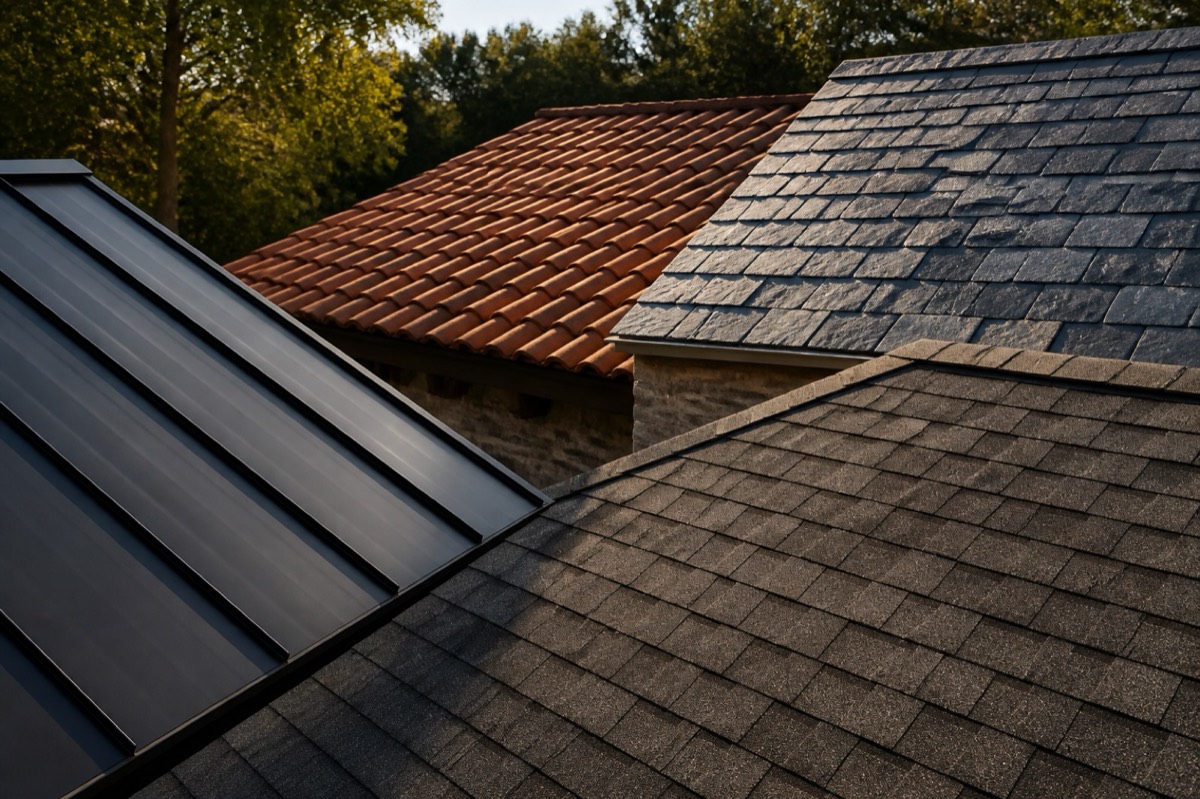
Slate sits in the premium material class, and slate quotes confuse homeowners for a different reason than most roofs: 'slate' now covers two products. Natural quarried slate is a century-class roof installed by a thin bench of true specialists — both the material and the labor sit in the top tier. Synthetic slate (composite or polymer) mimics the look at a lower tier with a broader installer pool and a fraction of the weight. Quotes that seem worlds apart are usually quoting different products, not different margins.
Why no dollar figures here: we only publish costs we can cite to a named, current source, and no publisher currently reports slate costs at that standard. The factors below tell you what actually drives the quote — and the fastest truth is three local quotes.
What drives the price
- Natural versus synthetic slate: the single biggest driver — different material class, different labor pool, different lifespan.
- Structural capacity: if the framing needs reinforcement to carry natural slate, that engineering and carpentry lands on the bill before a single tile goes up.
- Installer availability: true slate roofers are scarce in most markets, and thin competition plus travel time shows up in the labor line.
- Slate grade and quarry: harder slates last longer and cost more; the quarry also matters later, because repairs need matching stock in color and thickness.
- Flashing metal: copper or stainless is the traditional pairing so the flashings keep pace with the stone; cheaper metals shorten the whole roof's effective life.
- Roof complexity and pitch: hips, valleys, dormers, and steep pitches multiply slow, careful handwork — and slate work is already slow by design.
- Repair versus replace: an aging slate roof often needs targeted tile and flashing repair, not replacement — a contractor who defaults to tear-off on slate deserves a second opinion.
Lifespan, weight, and performance
Lifespan: A properly installed natural slate roof is generally expected to last a century or more — hard slates can outlive the building's other systems, and the flashings and fasteners typically fail before the stone does. Synthetic slate carries manufacturer warranties measured in decades, not centuries; it's a different product with a different lifespan story.
Structural weight: Weight is the gating question with natural slate — it's one of the heaviest roofing materials per square foot, and many framed homes weren't designed to carry it. Get a structural engineer's assessment before you collect bids, not after. Synthetic slate exists largely to solve this problem: it installs at shingle-class weight on ordinary framing.
Weather performance: Natural slate is fireproof, impervious to rot and insects, and shrugs off UV — its weaknesses are impact (foot traffic and large hail can crack tiles) and bad workmanship. It pairs traditionally with copper flashing and fasteners because the roof outlives cheaper metals; skimping on flashing is the classic way a century roof fails in decades.
Common questions
- Do I need a structural engineer before getting slate quotes?
- For natural slate, yes — treat it as step one. The material is heavy enough that many homes need framing reinforcement, and that answer changes the scope and the product decision entirely. An engineer's letter also keeps every bidder pricing the same job.
- Is synthetic slate a reasonable substitute for the real thing?
- It's the pragmatic middle: the look of slate at shingle-class weight, installable by a much broader contractor pool, with a decades-scale warranty instead of a century-scale lifespan. If your framing can't carry natural slate or the specialist bench in your area is empty, it's often the honest answer.
- My slate roof is leaking — does it need to be replaced?
- Usually not. On slate, the default is repair: cracked or slipped tiles get swapped and worn flashings get renewed, often extending the roof for decades. Be skeptical of any contractor whose first move on a slate roof is full tear-off — that's frequently a sign they don't actually work in slate.
- Why does the quarry or matching stock matter?
- Slates vary in color, texture, and thickness by quarry, and a repair with mismatched stock is visible from the street. Good slate contractors ask what's on the roof and source matching or compatible tiles; some quarries and salvage suppliers stock legacy material for exactly this reason.
Related guides
Get the free Seasonal Home Maintenance Schedule
Month-by-month checklist for your state — roof, gutters, HVAC and more. Plus license-lapse alerts for contractors you're considering.
We don't sell your email address. See our privacy policy.