Home › Advice › Roofing › Tile Roof Maintenance: What to Check, When, and Why You Should Never Walk It Yourself
Tile Roof Maintenance: What to Check, When, and Why You Should Never Walk It Yourself
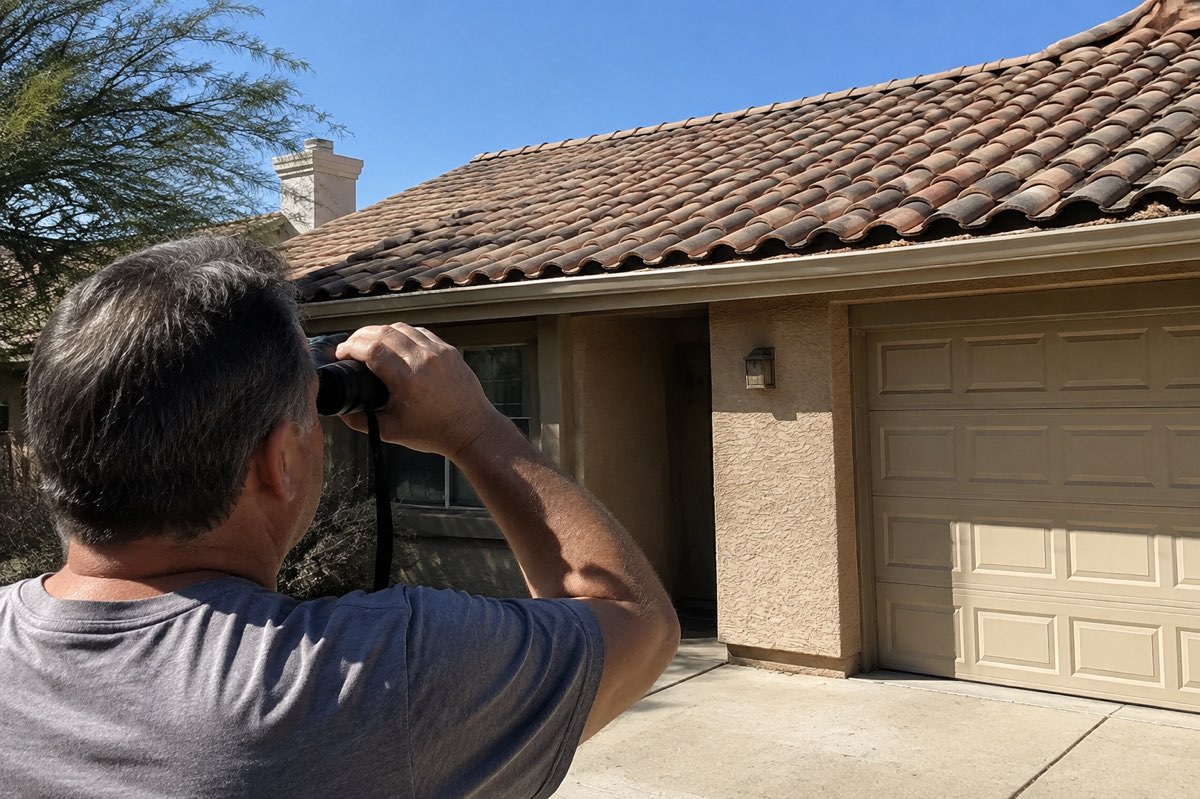
A tile roof is one of the longest-lasting roof systems you can own. That durability creates a trap: because the tiles themselves can outlast the mortgage, many homeowners assume the roof needs nothing at all. It does — just a different kind of attention than a shingle roof.
Here is what a tile roof actually needs, on what schedule, and the one fact most tile-roof owners never hear until it becomes an expensive surprise.
Rule one: never walk your tile roof
Start with the rule that prevents the most damage. Concrete and clay tiles are strong against weather and weak against point loads. A person stepping in the wrong spot — the middle of a tile instead of the overlapping lower edge, or the field instead of the valley of the tile profile — cracks tiles instantly, and often invisibly. Hairline cracks let water through slowly, and you find out months later as a ceiling stain.
Professional tile roofers are trained in load distribution and walk paths, and the Tile Roofing Industry Alliance (TRIA) publishes installation and maintenance guidance specifically because tile systems are unforgiving of untrained handling. Inspect from the ground with binoculars, from a ladder at the eave, or with a drone. If something needs hands-on attention, that's a contractor's job.
The annual inspection rhythm
Once a year, plus after any hurricane, hailstorm, or wind event, check for:
- Cracked, chipped, or slipped tiles. Scan the whole field. A slipped tile exposes the underlayment beneath to direct UV and rain, which ages it fast.
- Valleys. This is where two roof planes meet and water concentrates. Leaves, branches, and granule debris pile up here and dam water sideways under the tiles. Valleys should be visibly clear metal.
- Flashing at penetrations. Chimneys, vents, skylights, and wall intersections fail before open field areas do. Look for lifted, corroded, or sealant-patched flashing — repeated caulk patches are a sign someone has been treating a symptom.
- Ridge and hip lines. Mortar-set or foam-set ridge tiles can loosen over time. A rocking ridge tile is a wind casualty waiting to happen.
- Gutters and downspouts. Backed-up gutters push water under the first course of tile at the eave, one of the most common tile-roof leak points.
Moss, algae, and humid-state staining
In Florida, coastal Texas, and much of California, tile roofs grow things. Black algae streaking is mostly cosmetic. Moss and lichen are not — they hold moisture against the tile surface, work roots into joints, and can lift tiles at the overlaps.
Two cautions. First, never let anyone pressure-wash a tile roof at high pressure; it can crack tiles, strip surface coatings, and drive water under the field. Soft-wash chemical treatment applied by someone trained on tile is the standard approach. Second, this work involves walking the roof, so it falls under rule one: hire it out, and ask the contractor specifically how they walk tile without breaking it. Their answer tells you a lot.
The underlayment problem: short-lived paper under long-lived tile
This is the part of tile roof ownership nobody explains at closing. The tiles are not the waterproofing. The underlayment — the membrane layer installed on the deck beneath the tiles — is what actually keeps water out. Tiles shed the bulk of the water and protect the underlayment from sun and impact.
The mismatch: tiles routinely last far longer than the underlayment beneath them. Older felt-based underlayments in particular can wear out decades before the tiles show any distress. When that happens, the fix is not new tiles — it's a lift-and-relay, where a contractor removes the tiles, replaces the underlayment and flashings, and reinstalls the original tiles (replacing broken ones). It's a major project, but far cheaper than a full tear-off with new tile, and it resets the clock on the part of the roof that actually failed.
If your tile roof is 20 or more years old and you don't know what underlayment is under it, that question belongs at the top of your next inspection. Ask the inspecting contractor to check the underlayment condition at accessible points, not just the tile surface.
Broken-tile triage: repair or bigger conversation?
A few broken tiles after a storm is a repair. A pattern is a conversation. Use this rough triage:
- One to a handful of cracked or slipped tiles, underlayment intact: straightforward repair. Ask whether matching tiles are still manufactured; for discontinued profiles, contractors often harvest matching tiles from a hidden area of your own roof and put the mismatched replacements there.
- Recurring leaks at valleys or flashings: usually a flashing rebuild, not a tile problem. Still a repair, but get it done properly rather than caulked.
- Repairs recurring across different areas, or any contractor telling you the underlayment is brittle, cracked, or torn: stop approving one-off patches. Ask for a lift-and-relay estimate alongside the repair quote. When repair quotes start stacking up year after year, you're paying replacement money on an installment plan without getting a new roof.
Vetting the contractor who touches it
Tile is a specialty. Before hiring, verify the license: in Florida, look the contractor up through the DBPR license search at myfloridalicense.com; in California, use the CSLB lookup at cslb.ca.gov. Texas has no state roofing license — a voluntary RCAT credential exists, so ask about it, and lean harder on insurance certificates and tile-specific references there. Then ask two tile-specific questions: how many tile roofs they work on per year, and how they walk tile without breaking it. Vague answers on either are disqualifying.
Find license-verified tile roofers →
The short version
Inspect yearly from the ground, keep valleys and gutters clear, soft-wash growth in humid climates, and never put your own feet on the tiles. Most importantly, know that your roof has two lifespans — the tile and the underlayment — and plan for the shorter one.
Quick answers
- How often should a tile roof be inspected?
- Once a year is a reasonable baseline, plus after any major storm. In humid coastal states, an annual check catches moss, slipped tiles, and clogged valleys before they cause leaks.
- Can I walk on my tile roof?
- You shouldn't. Concrete and clay tiles crack under concentrated foot pressure, and trained roofers use specific techniques and walk paths to avoid breakage. Homeowner foot traffic is one of the most common causes of broken tiles.
- Do tile roofs need to be replaced if the tiles still look fine?
- Sometimes, yes. The underlayment beneath the tiles is the actual waterproofing layer, and it wears out decades before the tiles do. If the underlayment has failed, the roof leaks no matter how good the tiles look.
Keep your home plan moving
Get the free Seasonal Home Maintenance Schedule
Month-by-month checklist for your state — roof, gutters, HVAC and more. Plus license-lapse alerts for contractors you're considering.
We don't sell your email address. See our privacy policy.
Sources
- Tile Roofing Industry Alliance — TRIA
- Florida DBPR License Search — Florida Department of Business and Professional Regulation