Home › Advice › Roofing › Storm Chaser Roofers: How to Spot Them Before You Sign
Storm Chaser Roofers: How to Spot Them Before You Sign
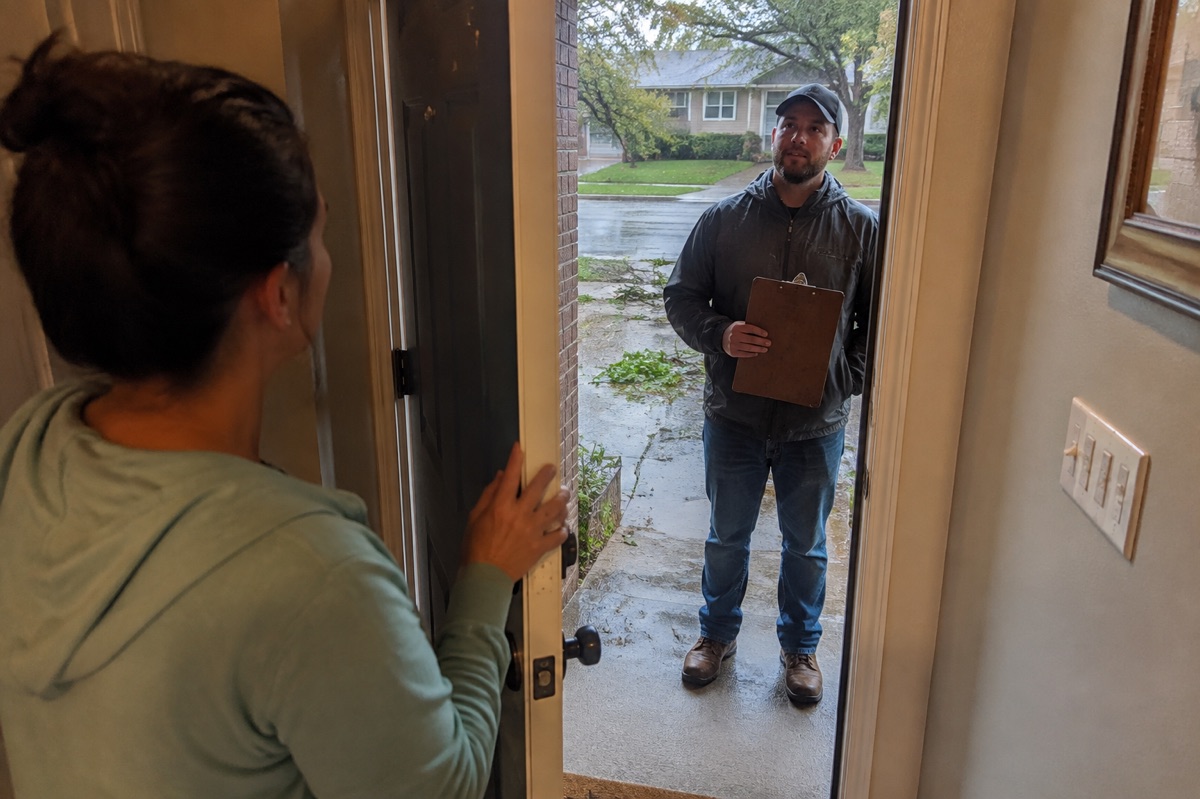
After a hurricane, two waves hit your neighborhood. The first is the storm. The second is the trucks — out-of-town crews with fresh magnetic door signs, knocking on doors, offering free roof inspections, and promising your insurance will cover everything.
Some of those crews are legitimate contractors following the work. Many are not. This guide explains how the storm-chaser model works, how to check any crew against state records in about a minute, and what to do if you already signed something.
How the storm-chaser model works
Storm chasers are not primarily in the roofing business. They are in the insurance-claim business. The playbook usually looks like this:
- Arrive fast. Crews move into a disaster area within days, sometimes hours, of landfall. Speed matters because homeowners are stressed, insurers are overwhelmed, and normal caution drops.
- Offer a free inspection. The inspector climbs your roof and — surprise — finds damage. Sometimes it is real. Sometimes it is exaggerated. In the worst cases, it is created on the spot.
- Get a signature on the doorstep. The document is often an assignment of benefits (AOB) or a contingency agreement. An AOB transfers your insurance claim rights to the contractor, letting them bill and negotiate with your insurer directly. You lose control of your own claim.
- Harvest the claim, do the minimum. The crew does fast work with whatever materials and labor are available, collects the insurance money, and moves to the next disaster zone.
- Disappear before the leaks show. Roof failures from rushed work often take months to appear — a stain on the ceiling next rainy season. By then the phone number is dead and the "company" is three states away. The workmanship warranty is worthless if nobody exists to honor it.
None of this means every out-of-state crew is a fraud. Reciprocal licensing and legitimate disaster-response contractors exist. The difference is verifiable paperwork, and checking it takes less time than the sales pitch does.
The 60-second background check
A truck, a business card, and a yard sign prove nothing. State records do. Here is where to look:
- Florida: Search the contractor's name or license number at the DBPR license portal (myfloridalicense.com). Confirm the license is current, active, and in the right category — roofing work requires a roofing or applicable contractor license, not a handyman registration. Also confirm the name on the license matches the name on the contract.
- California: Search the Contractors State License Board at cslb.ca.gov. Check for an active C-39 roofing classification, the bond status, and any disciplinary actions.
- Texas: There is no state roofing license in Texas — anyone can legally call themselves a roofer. A voluntary credential exists through the Roofing Contractors Association of Texas (RCAT), which at least shows the contractor invested in accountability. In Texas, insurance, references, and a physical local address carry the weight a license would elsewhere.
While you have the records open, ask the contractor for a certificate of insurance (general liability and workers' compensation) sent directly from their insurance agent — not a photocopy from the truck. Fake certificates are a known storm-chaser move.
The Florida Department of Financial Services (myfloridacfo.com) also publishes consumer guidance on post-storm repair fraud and insurance claims, and operates channels for reporting suspected insurance fraud. If a deal smells wrong, that is where it gets reported.
Why local and licensed actually matters
The strongest argument for a local, licensed roofer is boring: they will still be there.
- Warranty service. A workmanship warranty is a promise to come back. A contractor with a local office, a state license to protect, and a reputation in your county has real incentive to honor it.
- Permits and inspections. Licensed local contractors pull permits and get work inspected. Storm chasers frequently skip permits, which can bite you at resale or on your next insurance renewal.
- Accountability. A licensed contractor can be disciplined by the state board and is typically bonded. An unlicensed crew can only be chased in court — if you can find them.
Red flags, ranked
- They knocked on your door uninvited after a storm.
- They pressure you to sign an AOB or contract on the first visit.
- They offer to "waive" or "cover" your deductible. Deductible schemes are a common form of insurance fraud, and you can be pulled into it.
- No local physical address — a P.O. box or an out-of-state address only.
- License number missing from the contract, the truck, and the estimate.
- They ask for a large deposit in cash or full payment upfront.
- They found dramatic damage your neighbors' roofers did not find.
Any one of these deserves a hard pause. Two or more, walk away.
If you already signed
Signing is not always the end of the story. Move quickly:
- Read the contract for a cancellation clause. Many home-solicitation contracts include a short cancellation window. Some states extend cancellation rights after declared emergencies. Send written cancellation notice immediately — email plus certified mail — if you are inside any window.
- Do not pay anything further. Stop payments until you have verified the license and insurance.
- Call your insurance company. Tell them exactly what you signed, especially if it was an AOB. They deal with this constantly and can flag suspicious claims.
- Document everything. Photos of the roof before work starts, copies of every document, names, truck plates, phone numbers.
- Report it. In Florida, consumer and insurance fraud resources are available through the Department of Financial Services (myfloridacfo.com), and unlicensed contracting can be reported to DBPR. California homeowners can file complaints with the CSLB. Texans can contact the state attorney general's consumer protection division.
- Talk to a lawyer if real money is at stake. A one-hour consultation is cheap compared to losing an insurance claim.
The pattern to remember: legitimate contractors survive verification, and pressure is the tell. Anyone who needs your signature before you have had time to run a 60-second license search is telling you what the search would find.
Quick answers
- Is it illegal to hire an unlicensed roofer after a hurricane?
- In Florida and California, roofing work generally requires a state license, and hiring unlicensed contractors can leave you with no recourse and potential liability. Texas has no state roofing license, which makes vetting even more important there.
- Should I sign an assignment of benefits (AOB) with a roofer?
- Be cautious. An AOB hands control of your insurance claim to the contractor. Read it carefully, understand what rights you are giving up, and consider consulting your insurer or a lawyer before signing.
- What if I already signed a contract with a storm chaser?
- Check the contract for a cancellation window, send written notice immediately if one applies, document everything, and report suspected fraud to your state's consumer protection or insurance fraud office.
Keep your home plan moving
Get the free Seasonal Home Maintenance Schedule
Month-by-month checklist for your state — roof, gutters, HVAC and more. Plus license-lapse alerts for contractors you're considering.
We don't sell your email address. See our privacy policy.
Sources
- Verify a Contractor License — Florida DBPR
- Consumer Resources — Florida Department of Financial Services