Home › Advice › Roof Insurance Claims: A Step-by-Step Guide for Homeowners
Roof Insurance Claims: A Step-by-Step Guide for Homeowners
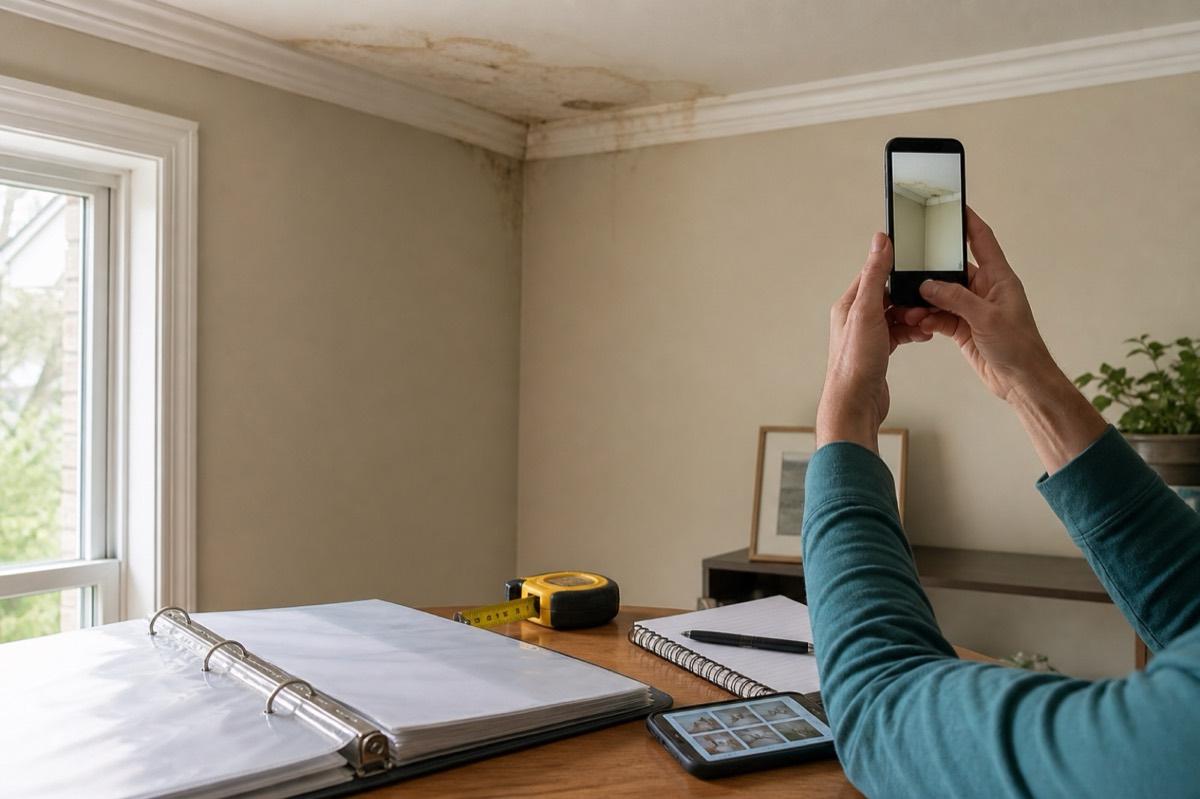
A roof claim is a process, not a phone call. Homeowners who understand the sequence — document, report, protect, meet the adjuster, read the scope, supplement if needed — recover faster and get paid more accurately than those who improvise. Here is the full sequence, in order.
Step 1: Document your roof before storm season
Insurers pay for storm damage, not pre-existing wear. The single best thing you can do is prove what your roof looked like before the storm.
- Take dated photos of every roof slope from the ground, plus close-ups of flashing, vents, and gutters.
- Photograph interior ceilings in every room, especially near chimneys and skylights.
- Keep receipts and permits from any past roof work in one folder with your policy declarations page.
- Update the photos once a year and after any repair.
If a claim is ever disputed, these photos are the difference between "the adjuster's opinion" and "documented condition."
Step 2: After the storm, do a safe self-check
Do not get on the roof. Walk the property from the ground and look for:
- Shingles or tile fragments in the yard
- Lifted, creased, or missing shingles visible from the ground
- Dented gutters, downspouts, or soft metal vents
- Water stains on ceilings or in the attic
Photograph everything with your phone, which timestamps the images. If water is actively entering, move belongings and place containers — then move to Step 3 quickly.
Step 3: Call your insurer first, then a contractor
Report the claim to your insurance company before signing anything with a contractor. Your policy requires prompt notice of loss, and the claim number you receive organizes everything that follows. Florida's Department of Financial Services (myfloridacfo.com) operates a consumer helpline and publishes claim-filing guidance if you hit resistance or aren't sure your carrier is handling the claim properly. Citizens Property Insurance (citizensfla.com) publishes a similar step-by-step claims process for its policyholders.
You do need a contractor early for one thing: emergency mitigation. Your policy obligates you to prevent further damage, so reasonable tarping or temporary patching is expected — keep the invoice, because it is typically reimbursable. What you should not do early is sign a full repair contract, a broad assignment of benefits, or anything a door-knocker slides in front of you "so we can deal with the insurance for you."
Step 4: Know the referral-fee rule (Florida)
Florida law is direct on this point. Under section 489.147, Florida Statutes, contractors are prohibited from paying or receiving referral fees for roofing work paid by an insurance claim, and from advertising inducements — like gift cards or deductible rebates — to get you to file a roof claim. A contractor who offers to "cover your deductible" or pays the person who knocked on your door a cut of your claim is breaking the law, and that tells you everything about how they'll handle your roof. This rule exists to protect you: it keeps your claim decision between you and your insurer, not a sales commission.
Verify licensing before signing anything. In Florida, check the contractor at the DBPR license portal (myfloridalicense.com). In California, use the CSLB lookup (cslb.ca.gov). Texas has no state roofing license — a voluntary RCAT credential exists, so ask for it plus proof of liability insurance.
Step 5: The adjuster meeting
The insurer will send an adjuster to inspect. Attend the inspection yourself, and consider having your contractor present — a knowledgeable roofer can point out damage the adjuster might walk past. Bring your pre-storm photos and your post-storm photos. Take notes on what the adjuster inspects and photographs. Ask when you should expect the written estimate.
Step 6: Read the scope of loss
The adjuster's written estimate — the scope of loss — lists every item the insurer agrees to pay for: squares of shingles, underlayment, drip edge, flashing, labor, debris removal. Read it line by line and compare it against your contractor's estimate. Common gaps include missing slopes, omitted flashing or ventilation components, and code-required upgrades your policy may cover under ordinance-or-law provisions. If items are missing, that's not the end of the claim — it's the start of the supplement.
Step 7: RCV, ACV, and depreciation
Two numbers control what you actually receive:
- Actual cash value (ACV) is replacement cost minus depreciation for age and condition. Some policies only ever pay ACV on roofs — check yours.
- Replacement cost value (RCV) pays the full cost to replace with like materials. Most RCV policies pay in two installments: ACV up front, then the recoverable depreciation after you finish the work and submit invoices.
That second check is easy to leave on the table. Complete the repairs, keep every invoice, and formally request the depreciation release. Your deductible is subtracted from the payout — you pay it, always.
Step 8: The supplement process
If your contractor opens the roof and finds damage the adjuster couldn't see — rotted decking, damaged underlayment — they submit a supplement: photos, measurements, and an itemized cost for the additional work. Supplements are a normal part of claims, not a fight. Keep the paper trail organized, respond to insurer requests quickly, and get any approved changes in writing before the extra work proceeds.
If the claim stalls
Ask the insurer, in writing, for the specific reason for any denial or shortfall. Florida policyholders can contact the DFS consumer helpline through myfloridacfo.com for free help; Citizens policyholders have a defined dispute process outlined at citizensfla.com. Escalate with documentation, not volume — the homeowner with dated photos, a clean scope comparison, and organized invoices usually wins.
Quick answers
- Should I call my insurance company or a roofer first after storm damage?
- Call your insurer first to report the claim, then arrange temporary protection like tarping to prevent further damage. Get repair estimates from licensed contractors, but be cautious of anyone who pressures you to sign a contract or an assignment of benefits before your adjuster has inspected the roof.
- What is the difference between RCV and ACV on a roof claim?
- Replacement cost value (RCV) pays what it costs to replace the roof with similar materials. Actual cash value (ACV) pays replacement cost minus depreciation for the roof's age and wear. Many RCV policies pay ACV up front and release the depreciation after you complete the work and submit proof.
- Can a roofer pay or waive my insurance deductible?
- No. Offering to waive, rebate, or absorb an insurance deductible is a red flag and is illegal in many states, including Florida. You are expected to pay your deductible, and a contractor who hides it is committing insurance fraud on your behalf.
Keep your home plan moving
Get the free Seasonal Home Maintenance Schedule
Month-by-month checklist for your state — roof, gutters, HVAC and more. Plus license-lapse alerts for contractors you're considering.
We don't sell your email address. See our privacy policy.
Sources
- Insurance Resources for Consumers — Florida Department of Financial Services
- Claims Resources for Policyholders — Citizens Property Insurance Corporation