Home › Advice › Roofing › Metal Roof Maintenance: What Actually Needs Attention (and What Doesn't)
Metal Roof Maintenance: What Actually Needs Attention (and What Doesn't)
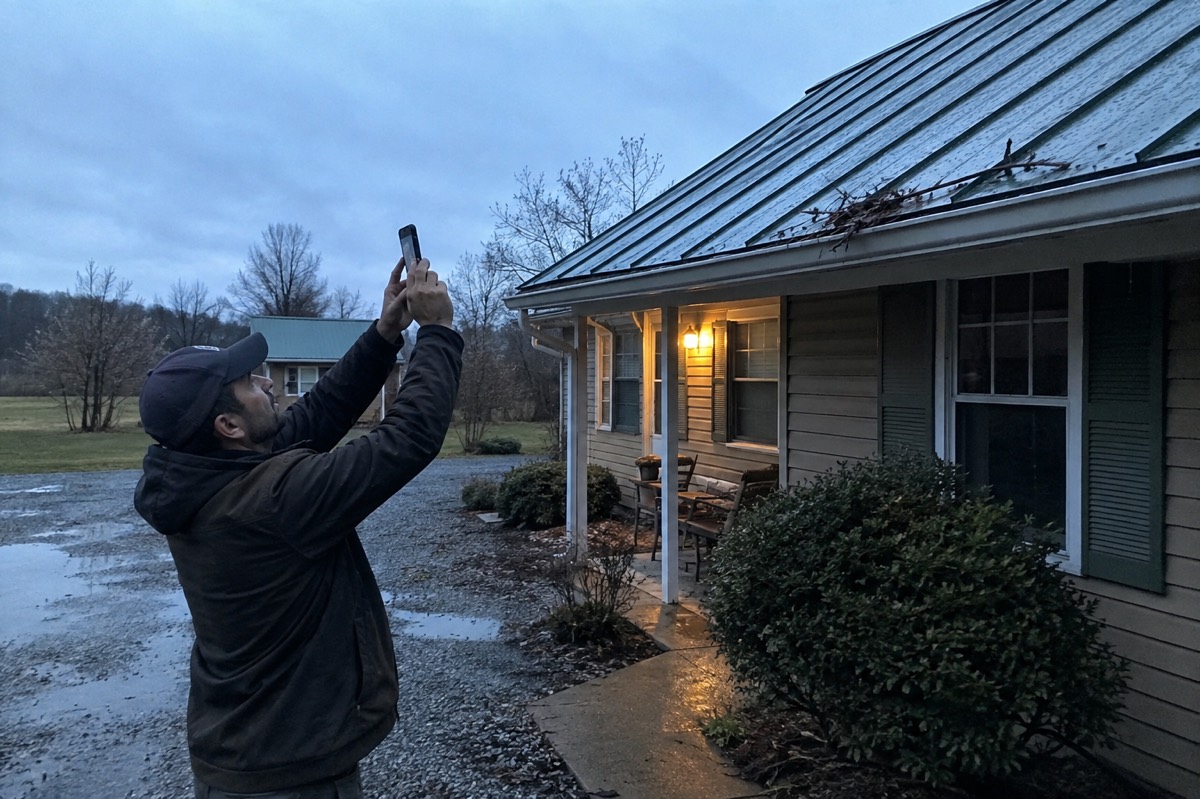
Metal roofing gets sold as "maintenance free." That is an overstatement. The honest version: metal roofs need meaningfully less maintenance than most roofing materials, but they still need some — and skipping the small stuff is how a long-life roof develops short-life problems. The Metal Roofing Alliance, the industry's main homeowner education group, positions metal as a durable, long-service material, not a zero-attention one.
Here is what actually needs looking after, roughly in order of importance.
1. Know which system you have: exposed fastener or standing seam
This one distinction drives most of your maintenance plan.
- Exposed-fastener panels (often called screw-down, ag panel, or corrugated) attach with screws driven through the panel face. Each screw has a rubber or neoprene gasket sealing the hole. Those gaskets age in sunlight and heat, and the panels themselves expand and contract daily, which can slowly work screws loose or wallow out the holes.
- Standing seam panels attach with hidden clips. No gaskets exposed to the sun, far fewer penetrations, far less routine service.
If you have an exposed-fastener roof, gasket and fastener service is the core of your maintenance life. Expect periodic inspections and, at some point in the roof's life, a fastener replacement pass — often with slightly larger-diameter screws so they bite fresh metal. Loose, backed-out, or angled screws and cracked gaskets are exactly what an inspection should catch before water does.
If you have standing seam, your checklist is shorter: seams, flashings, penetrations, and debris.
2. Keep debris out of valleys and off the panels
Leaves, pine needles, and branches that sit in valleys and behind chimneys hold moisture against the panel finish and can dam water sideways under laps. Twice-a-year clearing — and after major storms — is usually enough. Clean gutters at the same time; overflowing gutters push water where the roof edge details were never designed to handle it.
A soft brush or a garden hose from the ground handles most of it. Avoid walking the roof yourself: metal is slippery when wet or dusty, foot traffic can dent some profiles, and panel damage from improper walking is a common self-inflicted problem. If it requires getting up there, that is a contractor task.
3. Watch for scratches and touch up correctly
Painted metal panels rely on their factory finish for corrosion resistance. Small scratches that don't reach bare metal are cosmetic. Deeper scratches that expose the substrate should be touched up with paint supplied or approved by the panel manufacturer — not generic hardware-store spray paint, which weathers differently and can void finish warranties. Keep touch-up paint from your original installation if the installer offers it.
4. Dissimilar metals: the quiet roof-killer
Certain metals corrode when they contact each other or when water runs from one onto the other. The classic mistake is copper interacting with galvanized or Galvalume steel — copper flashings, copper pipes, or even runoff from a copper component dripping onto steel panels can set up galvanic corrosion. Treated lumber in direct contact with panels can cause similar trouble.
Practical rules:
- Don't let anyone add copper flashings, snow guards, or accessories to a steel roof without confirming compatibility.
- Check that HVAC condensate lines, satellite mounts, and solar attachments use compatible metals and isolation where needed.
- If a handyman or another trade works on your roof, mention this. Most dissimilar-metal damage comes from well-meaning add-ons after the original install.
5. Coastal homes: salt is a real factor
Salt spray accelerates corrosion, especially on cut panel edges and fasteners. If you live near the coast, ask what substrate and finish your panels carry and whether the manufacturer's warranty even applies at your distance from saltwater — many finish warranties carry coastal exclusions or reduced terms. Aluminum panels are often specified in true oceanfront settings for this reason. Ongoing care is simple: occasional freshwater rinsing of areas rain doesn't wash (under eaves, sheltered walls-to-roof transitions) helps remove salt buildup.
6. Snow guards, where relevant
Metal sheds snow in sheets. In snow regions, snow guards or rails protect gutters, vents, landscaping, and anyone standing below. If your roof has them, include their attachment points in inspections; if it doesn't and you get real snow, ask a contractor about retrofitting — with compatible metals and manufacturer-approved attachment, per the dissimilar-metals rule above.
7. Oil canning: cosmetic vs. something worse
Oil canning is the wavy, rippled look that can appear in the flat areas of metal panels, especially in low-angle light. On its own, it is a cosmetic phenomenon, not a leak or a structural failure, and most manufacturers explicitly treat it that way. It becomes worth a professional look when it appears suddenly, worsens over time, or shows up together with loose clips or fasteners, popped seams, or interior leaks — those can signal substrate movement or attachment problems rather than ordinary panel aesthetics.
Hiring the maintenance out
Fastener replacement, flashing repairs, and anything requiring roof access belong with a licensed roofing contractor — and metal experience specifically, since asphalt-only crews routinely misdiagnose metal systems. Verify credentials before anyone climbs a ladder:
- Florida: confirm an active roofing contractor license at the DBPR lookup, myfloridalicense.com.
- California: check the CSLB license database at cslb.ca.gov.
- Texas: there is no state roofing license. Look for the voluntary RCAT credential, proof of insurance, and metal-specific references.
Find license-verified metal roofers →
The bottom line: a metal roof asks for a couple of inspections a year, clean valleys, correct touch-up, and discipline about what gets attached to it. That is a light workload for a roof built to outlast most of the things under it — as long as "low maintenance" never gets rounded down to "no maintenance."
Quick answers
- Do metal roofs need maintenance?
- Yes, but less than most roofing types. Plan on periodic inspections, debris removal, and — on exposed-fastener systems — checking and eventually replacing fastener gaskets as they age.
- Is oil canning on a metal roof a problem?
- Usually not. Oil canning is a visible waviness in flat panel areas and is generally a cosmetic issue. Have a contractor evaluate it if it appears alongside loose fasteners, panel movement, or leaks.
- How often should metal roof fasteners be checked?
- There is no single universal interval. Exposed-fastener roofs should be inspected periodically because the rubber gaskets under screw heads degrade over time; your installer or manufacturer guidance is the best schedule to follow.
Keep your home plan moving
Get the free Seasonal Home Maintenance Schedule
Month-by-month checklist for your state — roof, gutters, HVAC and more. Plus license-lapse alerts for contractors you're considering.
We don't sell your email address. See our privacy policy.
Sources
- Metal Roofing Alliance Homeowner Resources — Metal Roofing Alliance
- Florida DBPR License Lookup — Florida Department of Business and Professional Regulation