Home › Advice › Hurricane Protection › Hurricane Screens vs. Shutters: How the Main Opening Protection Types Compare
Hurricane Screens vs. Shutters: How the Main Opening Protection Types Compare
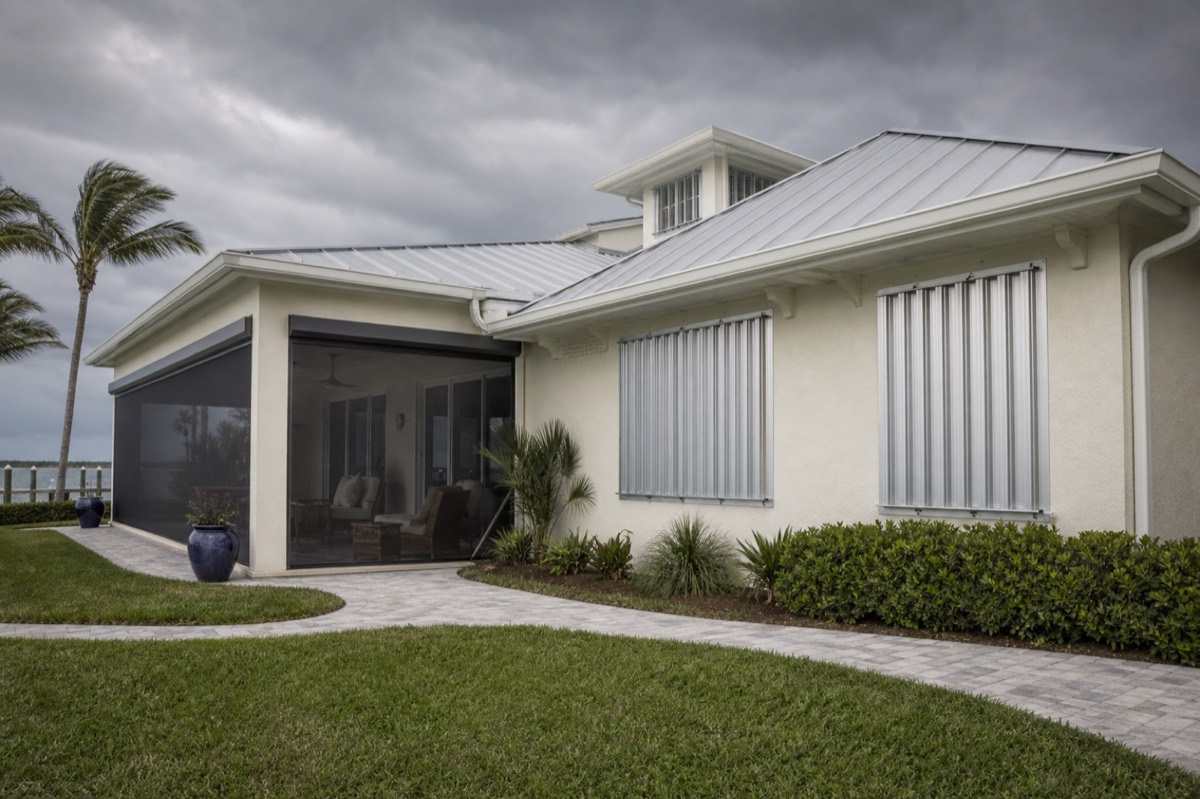
If you're shopping for opening protection, you'll run into four main categories: fabric or mesh screens, roll-down shutters, accordion shutters, and removable storm panels. None of them is the "best" choice for every home. Each trades off deployment effort, appearance, cost, and daily livability differently.
Here's how they actually compare — and how to verify what a contractor is selling you before you sign.
The four main types at a glance
Fabric and mesh hurricane screens. Flexible woven or coated panels that attach over openings with clips, grommets, or tracks. Some are permanently mounted and motorized; others are stored and deployed before a storm. They're lighter than metal, let some light through, and can cover very large openings like lanais and patios that rigid shutters struggle with.
Roll-down shutters. Permanently installed housings above each opening with slats that roll down on tracks, either by hand crank or motor. Deployment is the easiest of any category — often one button. They're also the most visible when installed, since the housing box sits above the window year-round.
Accordion shutters. Permanently mounted shutters that fold to the sides of the opening and pull across on a track. No storage, no ladders, and one person can usually close them. The tradeoff: the stacked shutters remain visible beside your windows all year, which some homeowners dislike.
Storm panels. Removable corrugated panels — typically metal or polycarbonate — that bolt or slide into permanent tracks before a storm. This is usually the lowest-cost category up front. The cost you pay instead is labor: panels must be hauled out of storage, lifted (often on a ladder for second-story windows), installed opening by opening, and taken down afterward.
Deployment effort: the factor people underweight
Protection only works if it's actually deployed. Be honest about who will be putting it up.
- Motorized roll-downs and motorized screens: minutes, no physical effort. Best fit if you travel, are older, or have a lot of openings.
- Accordions: a few minutes per opening, no tools or storage. A strong middle ground.
- Manual fabric screens: effort varies widely by attachment system — some clip on quickly, some require ladder work.
- Storm panels: the most labor by far. A whole house can take hours and typically requires two people and a ladder. Panels sitting in the garage during a landfall protect nothing.
If a storm approaches while you're out of town, permanently mounted systems (roll-downs, accordions, fixed screens) can be closed by a neighbor. Stored panels usually can't.
Cost, in tiers rather than dollars
Pricing varies enormously by opening size, product line, motorization, and region, so treat any flat number you see online with suspicion. As a general ordering:
- Lowest tier: storm panels. Cheapest to buy, most labor to use.
- Middle tier: accordions and many fabric screen systems.
- Highest tier: motorized roll-downs, especially across many or oversized openings.
Get itemized quotes per opening from at least three licensed contractors and compare the same scope. A quote that lumps everything into one number makes comparison impossible.
Aesthetics and daily living
- Roll-down housings and accordion stacks are visible year-round. Ask to see installed examples before committing.
- Fabric screens on lanais can double as shade and insect screening in some motorized configurations.
- Storm panels are invisible day to day — only the mounting tracks or anchors show.
- Deployed metal shutters black out interiors completely; some fabric screens allow light and limited visibility, which matters if you shelter in place.
Egress: don't seal yourself in
Any protection you can't open from inside can trap you during a fire or block escape after structural damage. Plan at least one protected opening per bedroom that an occupant can open from the inside without tools — many accordion and roll-down products offer interior releases for exactly this reason. Ask each bidder how their proposal handles egress, and check what your local building department requires. If a salesperson hasn't thought about it, that tells you something.
Verify the paperwork, not the marketing
"Hurricane-rated" on a brochure is a marketing phrase, not a code determination. Whether a specific installation meets code depends on the exact product, size, mounting method, substrate, and your local wind requirements. Before you sign:
- Ask for the product approval documents for your configuration — the specific model, at your opening sizes, with the anchoring method being proposed on your wall type. A generic spec sheet is not that.
- Confirm a permit will be pulled. Opening protection installs generally require one. "We don't need a permit for this" is a red flag.
- Verify the license. In Florida, check the contractor at FL DBPR (myfloridalicense.com). In California, use CA CSLB (cslb.ca.gov). Texas has no state license for this kind of contracting work, so lean harder on permits, insurance certificates, and references there.
- Get the wind mitigation inspection after installation. In Florida, insurance credits depend on the OIR-B1-1802 inspection, and rating generally hinges on your weakest opening, per the discount criteria Citizens Property Insurance publishes at citizensfla.com/discounts. Protecting 90 percent of your openings may earn you nothing.
About grant programs
Florida's My Safe Florida Home program (mysafeflhome.com) offers free wind mitigation inspections and, when funded, matching grants for qualifying hardening projects, including opening protection. Eligibility, funding windows, and which improvements qualify are determined by the program — not by contractors. Be skeptical of any pitch claiming a specific product "qualifies you" for a grant. Apply through the official site, get your inspection, and let the program tell you what's eligible.
Find license-verified shutters-panels roofers →
Bottom line
Match the system to your life, not just your budget. If you'll reliably deploy panels yourself, they're the value play. If you won't — or can't — pay up for accordions, roll-downs, or a mounted screen system. Cover every opening, preserve egress, and make the contractor prove the approval paperwork for your exact configuration before any deposit changes hands.
Quick answers
- Are fabric hurricane screens as strong as metal shutters?
- It depends on the specific product and how it is installed. Some fabric systems carry product approvals for wind and impact resistance; others are sold only as debris screens. The paperwork for the exact product and mounting configuration on your home is what matters, not the category.
- Do hurricane shutters lower my insurance premium?
- Possibly, but credits are not automatic. In Florida, wind mitigation credits depend on a licensed inspection (the OIR-B1-1802 form), and your rating is generally based on the weakest opening. One unprotected window can undercut protection everywhere else.
- Can I mix different types of protection on one house?
- Yes, and many homeowners do — for example, roll-downs on large rear openings and panels on small side windows. Just remember insurers typically rate the whole house by its least-protected opening, so plan for full coverage.
Keep your home plan moving
Get the free Seasonal Home Maintenance Schedule
Month-by-month checklist for your state — roof, gutters, HVAC and more. Plus license-lapse alerts for contractors you're considering.
We don't sell your email address. See our privacy policy.
Sources
- My Safe Florida Home Program — Florida Department of Financial Services
- Wind Mitigation Discounts — Citizens Property Insurance Corporation