Home › Advice › Roofing › How to Choose a Tile Roofing Contractor
How to Choose a Tile Roofing Contractor
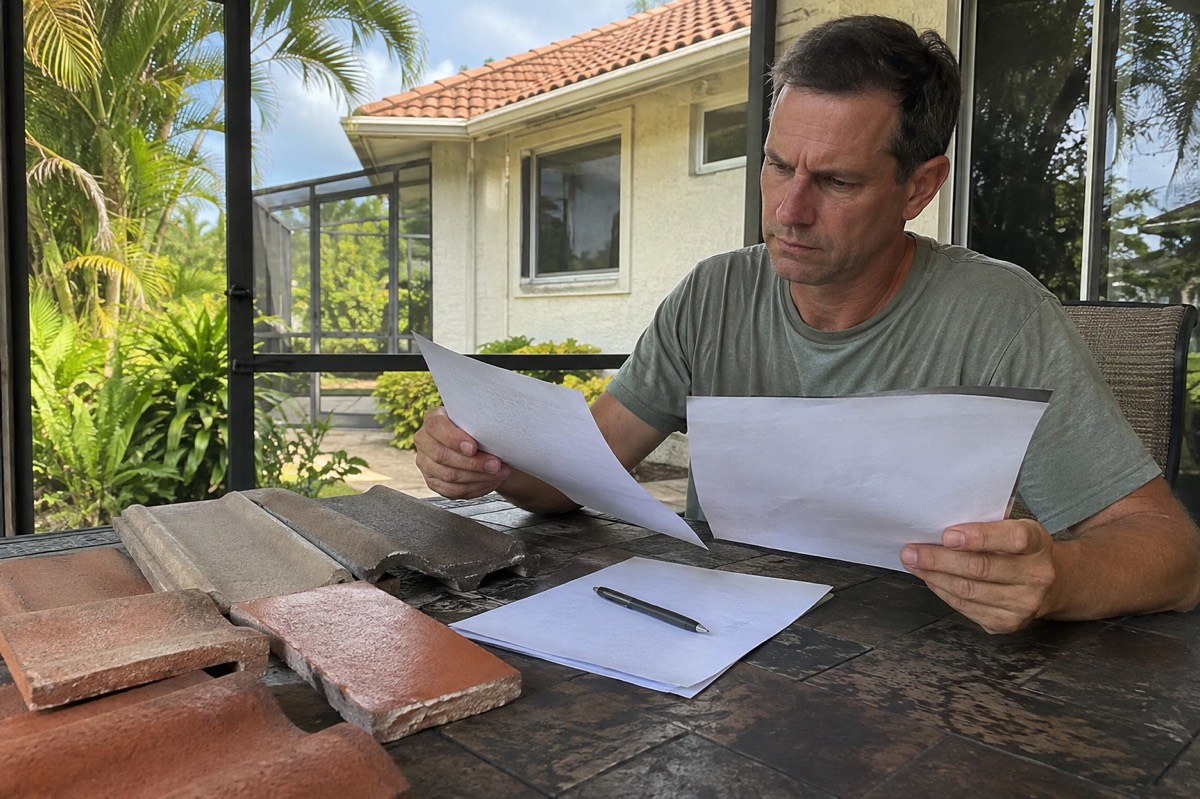
Tile roofs punish inexperience. The material is heavy, brittle underfoot, and unforgiving of shortcuts in the layers you can't see. A general roofer who mostly installs shingles can crack more tiles walking your roof than they fix. Here is how to separate a real tile contractor from a shingle crew taking a tile job.
Start with the license, then go past it
A license is the floor, not the finish line.
- Florida: verify roofing contractor licenses through the DBPR lookup at myfloridalicense.com. Check that the license is current, matches the business name on the contract, and has no open discipline.
- California: verify through the CSLB at cslb.ca.gov. Roofing work falls under the C-39 classification; confirm the classification, bond, and workers' compensation coverage.
- Texas: there is no state roofing license. A voluntary credential exists through the Roofing Contractors Association of Texas (RCAT), and it is worth asking for, but you will need to lean harder on insurance certificates, references, and tile-specific proof.
Then go past the license. Ask whether the contractor or crew leads have completed Tile Roofing Industry Alliance (TRIA) training. TRIA is the industry body that publishes installation standards and runs a certification program for tile installers. It is not a government requirement, and holding it does not guarantee a perfect job, but it tells you the contractor invested in tile-specific education rather than treating tile as shingles with extra steps.
Ask the weight question first
Concrete and clay tile is heavy — far heavier per square than asphalt shingles. If your home currently has a lighter roof and you are converting to tile, the structure has to be evaluated for the added load. Ask directly:
- Has this house carried tile before, or is this a conversion?
- If it is a conversion, who verifies the framing can take the load — an engineer, or the salesperson's eyeball?
- Will the permit application reflect the weight change?
A contractor who waves off the weight question on a conversion is telling you how the rest of the job will go. A qualified answer involves an engineer's letter or a documented structural review, not "these houses can handle it."
Walking protocol: the tell that separates tile crews from shingle crews
Tiles crack when stepped on wrong, and cracked tiles leak later — sometimes years later, after the warranty conversation has gotten awkward. Before you sign, ask:
- How does the crew walk the roof? Trained installers step on the load-bearing portions of the tile, use walk pads or foam, and stage materials to minimize traffic.
- What happens to tiles broken during the job? The honest answer is that some breakage happens and the contractor replaces broken tiles at their cost before closeout.
- Who does your other trades' damage control? Solar installers, satellite techs, and gutter crews break tiles too. A good tile contractor will note pre-existing damage in photos before starting, so nobody argues later about whose boot did what.
If the estimator walks your roof carelessly during the inspection, believe what you just watched.
Repair, re-roof, or reuse: get the honest middle option
Tile jobs come in three sizes, and a good contractor will tell you which one you actually need:
- Repair: replacing cracked or slipped tiles and fixing localized flashing or underlayment failures.
- Lift and re-lay: removing sound tiles, replacing the underlayment and flashings underneath, and reinstalling the original tiles. This exists because the tile typically outlives the underlayment — the waterproof layer fails while the tile above it still has service life left.
- Full replacement: new underlayment and new tile, needed when the tiles themselves are widely broken, delaminating, or discontinued beyond matching.
Be wary of a contractor whose only answer is full replacement. Also be wary of one who quotes a repair without getting under the tile — most tile "leaks" are underlayment and flashing failures, and patching the surface does not fix them. Ask what underlayment they propose, why, and what its expected service life is relative to your tile.
Fastening: ask how the tile stays on in wind
Tiles are attached by mechanical fasteners (nails or screws, sometimes with clips), adhesive foam, or a combination. Which method is appropriate depends on your local code, wind zone, roof slope, and the tile profile — this is exactly the kind of decision TRIA's installation standards address. You do not need to become an expert. You need the contractor to explain, in plain terms:
- Which fastening method they propose and why it suits your wind zone and code
- What the permit and inspection will verify
- How ridge, hip, and eave tiles — the first to go in a storm — are secured
A contractor who cannot explain their fastening choice, or who says "we do it the same way everywhere," has not thought about your roof specifically.
Red flags, collected
- No tile-specific references or photos of recent local tile work
- Vague or dismissive answers on structural weight for conversions
- No walking protocol and no plan for tiles broken during the job
- Quotes a full replacement without discussing lift-and-re-lay, or a repair without inspecting the underlayment
- Cannot name the underlayment product or fastening method in the contract
- License doesn't match the contract name, or (in Texas) no insurance certificates offered to offset the absence of state licensing
Find license-verified tile roofers →
The short version
Verify the license where one exists — FL DBPR, CA CSLB — and ask for RCAT membership in Texas. Then test for tile competence: TRIA training, a straight answer on structural weight, a real walking protocol, an honest read on repair versus re-lay versus replace, a named underlayment, and a fastening method justified by your wind zone. A contractor who clears all six is rare. That is the point.
Quick answers
- Does a tile roof last longer than its underlayment?
- Usually, yes. Concrete and clay tiles often outlast the underlayment beneath them, which is why many tile roof projects are actually underlayment replacements that reuse sound tiles. Ask any contractor what underlayment they install and how long they expect it to serve.
- Can a roofer walk on my tile roof without breaking tiles?
- Trained crews can, but tiles crack easily under a careless step. Ask how the crew distributes weight, whether they use walk pads or foam, and how they handle tiles they break during the job. A contractor with no walking protocol is a red flag.
- Is a general roofing license enough for tile work?
- A license proves the contractor is legal to work, not that they know tile. Look for tile-specific training such as TRIA certification, tile manufacturer credentials, and recent local tile projects you can see or call about.
Keep your home plan moving
Get the free Seasonal Home Maintenance Schedule
Month-by-month checklist for your state — roof, gutters, HVAC and more. Plus license-lapse alerts for contractors you're considering.
We don't sell your email address. See our privacy policy.
Sources
- Tile Roofing Industry Alliance — Tile Roofing Industry Alliance
- Florida DBPR License Lookup — Florida Department of Business and Professional Regulation